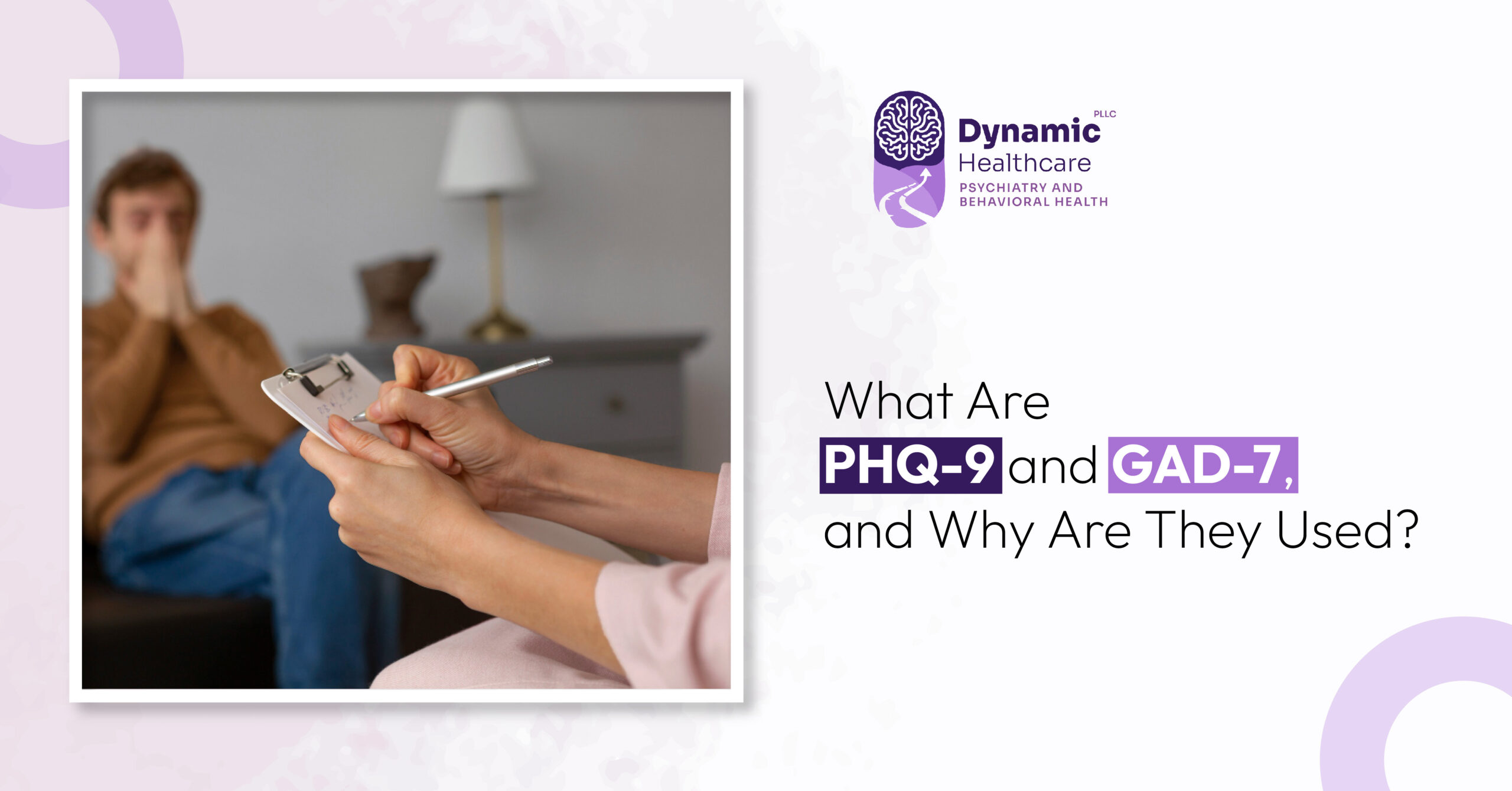
Mental health matters. Simple tools can help us find out how we are doing. Two common tools are the PHQ-9 and the GAD-7. These are short questionnaires. They help doctors and nurses learn if you might have depression or anxiety. Here, we explain what they are, how they work, and why they are helpful. We also share how Dynamic Healthcare PLLC uses them to care for you.
What Is the PHQ-9?
PHQ-9 stands for Patient Health Questionnaire nine. It has nine short questions. Each question asks about a problem you may have felt in the last two weeks. Questions use simple words like “little” or “more than half the days.” One question asks if you had thoughts of hurting yourself.
The PHQ-9 is quick. Most people finish it in a few minutes. It gives a score. The score helps clinicians know if depression may be present and how severe it might be.
What Is the GAD-7?
GAD-7 stands for Generalized Anxiety Disorder-7. It has seven questions. The questions ask about worry, nervousness, and trouble relaxing in the last two weeks. Like the PHQ-9, each question has short choices. The answers make a total score.
The GAD-7 is also quick. It helps show if anxiety may be a concern and how strong it is.
How the Questions Work
Both tools use simple choices for each question. Choices are like:
- Not at all
- Several days
- More than half the days
- Nearly every day
Each choice gives a number. The numbers add up to a total score. Higher scores mean more symptoms. Doctors use score ranges to guide next steps.
What the Scores Mean
Scores are a guide. They are not the whole answer.
For PHQ-9:
- Low score: Few symptoms. You may be doing okay.
- Medium score: Symptoms are there. You may need help or talk therapy.
- High score: Symptoms are stronger. You may need care sooner.
- If the suicidal question is checked, clinicians must ask more questions and keep you safe.
For GAD-7:
- Low score: Mild worry.
- Medium score: Noticeable anxiety. You may need help.
- High score: Strong anxiety. Treatment may help.
These ranges help the team decide what to do next.
Why Clinicians Use These Tools
PHQ-9 and GAD-7 are simple and fast. That is one reason doctors use them. Other reasons:
- They help start a conversation.
- They give a number to track change over time.
- They are useful for visits in person or by telehealth.
- They guide choices about therapy, medicine, or other care.
They help us see how you are right now and if things are getting better or worse.
Who Should Take These Screenings?
Many people can take them. Adults who feel down, tired, or worried may start with these tools. People with long-term medical problems may take them too. Caregivers and doctors may ask them before a visit to learn more.
They are not meant to replace a full checkup. A full checkup looks at many parts of your life. These tools give a quick view to help guide that checkup.
What These Tools Do Not Do
It is important to know what they cannot do. PHQ-9 and GAD-7 are not full diagnoses. A high score does not always mean a disorder. Only a clinician can make a diagnosis after talking with you.
Also, the tools do not tell us the cause. They do not replace talking with a doctor. They are a first step. They help the care team know what to ask next.
How We Use These Tools at Dynamic Healthcare PLLC
At Dynamic Healthcare PLLC, we use PHQ-9 and GAD-7 as part of care for people in Raleigh and beyond. We blend many kinds of care. This helps us see the full picture of your health.
Here is how we use the tools:
- We give the forms at the first visit. This helps us learn what you are feeling now.
- We may use them again at follow-up visits. That way, we can see if medicine or therapy is helping.
- We use the scores with other checks. That includes talk therapy, medical history, and lab tests when needed.
- We use them in both telepsychiatry and in-person visits. This makes caring for you easier and faster.
Our team cares about safety. If the PHQ-9 shows a risk of self-harm, we take steps right away. We talk with you, make a plan, and connect you with help.
What to Expect During and After Screening
If you take a PHQ-9 or GAD-7, expect short questions and clear choices. Be honest. The team uses your answers to help you.
After screening:
- The clinician will talk about the results.
- You may get a follow-up plan. This could be therapy, medication, or both.
- We may ask to check the scores again later. This helps us see if things improve.
You can ask questions. You can say if a question feels off or is not clear. We want to work with you.
Privacy and Safety
Your answers are private. The clinic keeps your information safe. We only share what is needed for your care or by law. If you have concerns, ask the clinician how your data is handled.
If you or someone you know is in danger, call local emergency services right away. If you are worried about harming yourself, tell a clinician or call a crisis line.
How Screening Helps with Treatment
Screening helps us pick the right care. For example:
- If scores show mild symptoms, talk therapy may help.
- If scores show moderate or severe symptoms, medication plus therapy may be best.
- Scores help track if the treatment is working. If a score drops, that can mean improvement.
Using these tools with other care leads to better support for you.
How to Prepare for a Screening
You do not need special steps. Try to think about your past two weeks. Be honest. Tell the team about medicines, sleep, and stress. Share what helps and what makes things worse.
Bring a list of current medicines. Bring notes about sleep, appetite, and daily mood if you can.
Final Thoughts
PHQ-9 and GAD-7 are tools. They help us find out if you might have depression or anxiety. They are quick and simple. They start a conversation. They help guide care.
If you feel low or worried, you do not have to handle it alone. At Dynamic Healthcare PLLC, we combine medical checks, therapy, and support. We work with you in person or by telehealth. Our team listens and makes a plan that fits you.
If you think you might need help, reach out. Small steps today can lead to better days ahead. We are here to help you find the right care.
FAQs
Q. Are these tests long?
No. Each test takes a few minutes.
Q. Can kids take them?
These forms are mostly for adults. For children, clinicians use other tools made for kids.


No comment