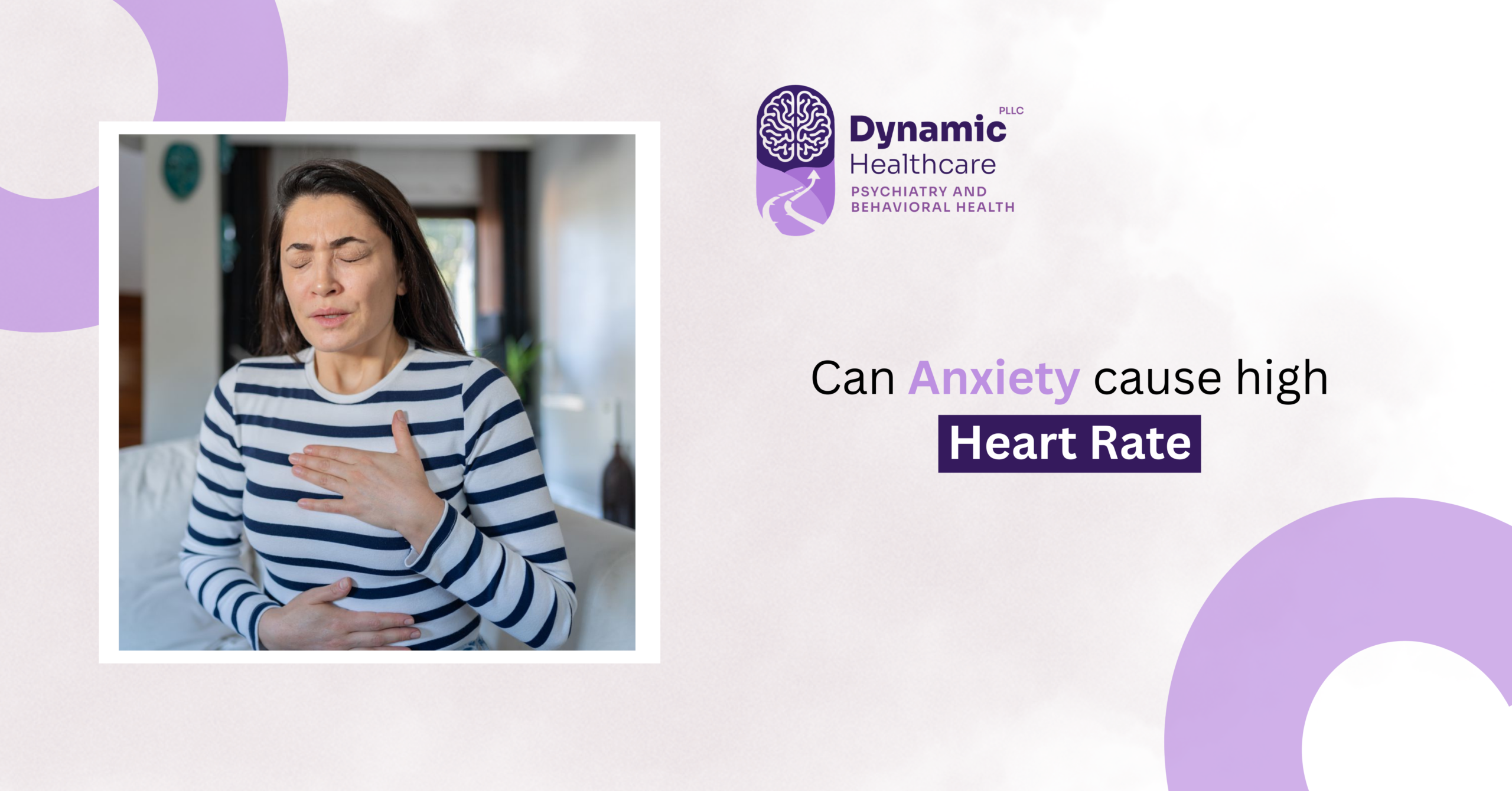
Anxiety can affect both the mind and the body. People feel anxious or notice physical symptoms. These include sweating, shaking, or a racing heart. So, can anxiety cause high heart rate? The answer is yes.
A fast heartbeat is pretty normal when you’re feeling anxious. Many individuals suddenly sense unease or worry that their heart may not be functioning properly.
We often deal with people who have physical symptoms of anxiety at Dynamic Healthcare PLLC.
Understanding why this happens can help you manage anxiety more effectively and know when to seek professional support.
How Anxiety Affects the Body
When your brain perceives stress or threat, it causes the fight-or-flight response. Your body is ready to act, as this reaction causes the release of stress hormones such as adrenaline. Physical changes include:
- Faster heart rate
- Rapid breathing
- Muscle tension
- Sweating
- Heightened alertness
Anxiety may cause the same emotions even when there’s no real danger. For example, your heart can race. This may happen during a presentation, a tough talk, or when you’re anxious at night.
Why Anxiety Can Cause a High Heart Rate
Activation of the heart to beat more rapidly by the nervous system happens when anxiety causes the stress response. This assists in accelerating oxygen and blood circulation in the body.
Several factors contribute to this reaction.
- Adrenaline Release
Adrenaline triggers the heart and raises the heart rate in case the body can quickly react to perceived danger.
- Rapid Breathing
Anxiety can increase breathing rate, potentially altering oxygen and carbon dioxide levels. This may contribute to anxiety attack heart palpitations.
- Increased Body Awareness
Nervous individuals are very conscious of their heartbeat. Any increase in the heart rate may be scary.
- Physical Tension
Stress causes muscle tightening and further exposes the body to it, making the heartbeat feel heavier.
This may be a vicious circle where the anxiety leads to a racing heart and this makes the person even more anxious.
What Is a Normal Heart Rate?
A normal resting heart rate for adults is 60-100 beats per minute. Lower numbers often show good fitness, while higher rates can be due to anxiety, stress, or activity. If your heart rate exceeds 100 bpm without a cause, see a professional.
Common Symptoms of Anxiety-Related High Heart Rate
Anxiety resulting in a rapid heartbeat may have different effects for different individuals. Some individuals have it at times, and others observe it during times of panic.
According to the National Institute of Mental Health, anxiety disorders often include physical symptoms like increased heart rate and chest discomfort.
Common sensations include:
- Pounding or racing heartbeat
- Heart palpitations stress
- Fluttering in the chest
- Tight chest anxiety
- Shortness of breath
- Lightheadedness
Such symptoms are not harmful and are temporary and pass away as soon as your body gets relaxed.
How Long Does Anxiety Cause Elevated Heart Rate?
The racing heart as a result of anxiety may take only a couple of minutes. The heart is slowed down because the body is in a state of normalcy. But specific reasons can prolong these symptoms, including:
- Ongoing stress or chronic anxiety
- Panic attacks
- Poor sleep quality
- High caffeine or stimulant intake
- Persistent worry or rumination
Repeat episodes can cause physical fatigue; so, managing anxiety and high heart rate early is crucial for both mental and physical health.
Anxiety vs. Heart Problems: How to Tell the Difference
It’s natural to worry about heart conditions, but anxiety-related heart rate changes often:
- Occur during stress or emotional situations
- Improve with relaxation or deep breathing
- Happens alongside worry or restlessness
Seek medical care immediately if you experience:
- Severe chest pain
- Fainting
- Persistent irregular heartbeat
- Pain radiating to the arm or jaw
- Shortness of breath with minimal activity
Simple Ways to Calm a Racing Heart from Anxiety
Anxiety and high heart rate may be decreased by using simple strategies:
Breathing Exercises
Slow breathing signals the body that it is safe to relax.
Try this simple technique:
- Inhale through your nose for four seconds
- Hold for four seconds
- Exhale slowly for six seconds
- Repeat for several minutes.
Grounding Techniques
The process of grounding aids in turning focus away from anxious ideas.
You can try the 5-4-3-2-1 method:
- Notice five things you can see
- Four things you can touch
- Three sounds you can hear
Reduce Stimulants
Caffeine and energy drinks may accelerate the heart rate and increase the symptoms of anxiety.
Prioritize Sleep
Sleep is good and enhances emotional regulation and removes anxiety symptoms.
When to Seek Professional Help
Request emergency medical assistance in case of:
- Intense chest ache or constriction extending to the arm, jaw, or back
- Sudden fainting or loss of consciousness
- Crippling dyspnea, which is not ameliorated
- Mixed upness, extreme weakness or difficulty in articulation
If your symptoms are uncomfortable but not severe, you can book a same-day appointment.
How Anxiety Treatment Can Improve Heart Health
Anxiety management is good for helping your heart and your body. People often notice:
- Fewer episodes of rapid heart rate
- Reduced heart palpitations anxiety
- Less frequent anxiety feeling in chest
- Better sleep
- Improved concentration
- More energy
- Greater emotional stability
Anxiety Care at Dynamic Healthcare PLLC
At Dynamic Healthcare PLLC, we understand that anxiety signs, such as a rapid heartbeat and panic, can impact everyday life. Our group offers personalized mental health support in Raleigh, North Carolina. Our services include:
Our services include:
- Psychiatric evaluations
- Medication management
- Therapy for anxiety and related conditions
- Mental health education and screenings
We offer in-person and online appointments for your convenience.
Final Words
Living with anxiety is tiring and can cause physical symptoms like a fast heartbeat. You are not alone and treatment is available.
If you feel anxious, it can hurt your well-being. It’s a good idea to get professional help at Dynamic Healthcare PLLC.
- Want a clear assessment and a simple treatment plan?
- Need to relax and reduce anxiety attacks?
Call us now and start feeling cool and in charge once more.
FAQs
Can palpitations be caused by stress?
Yes, palpitations may be caused by stress and anxiety. They stimulate the stress reaction of the body. This elevates adrenaline and alters the breathing pattern
Can anxiety cause increased heart rate even at rest?
Yes, even at rest, anxiety can make your heart race.



No comment