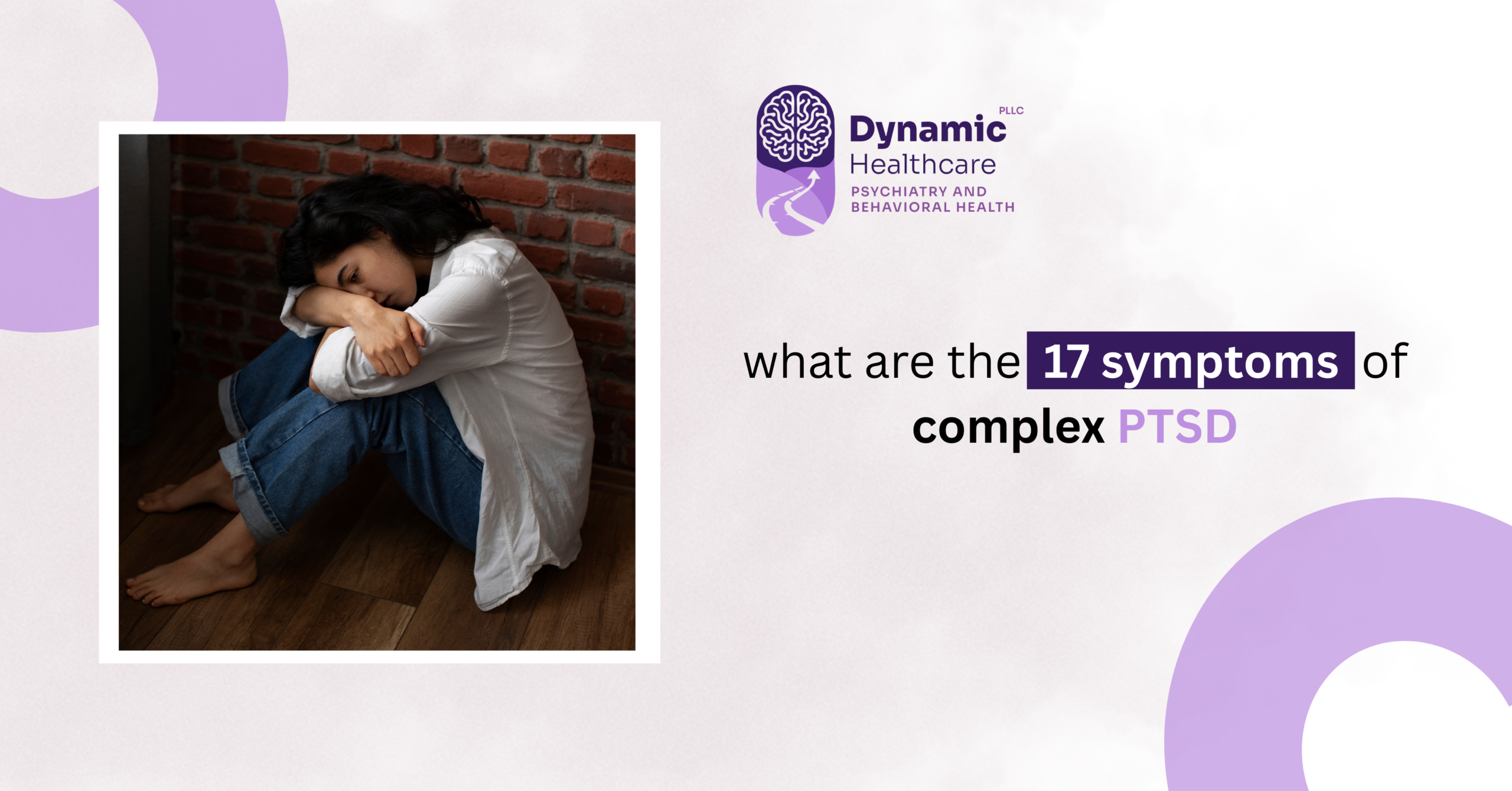
Complex post-traumatic stress disorder (Complex PTSD) is a complication that may complicate life. Many people start their journey toward healing by taking a complex PTSD test or seeking a professional CPTSD assessment to understand their experiences. Here, we describe 17 common signs in simple terms.
If you believe you have these signs or your loved one has them, seek assistance from a reliable adult or a medical team.
About Dynamic Healthcare PLLC
We are a mental health clinic. We make people feel more secure and powerful. We provide psychiatric assessment, counseling, drug assistance, and telepsychiatry, among others. We treat teenagers and adults with trauma and stress. We are based in Raleigh.
17 Symptoms of Complex PTSD
The following are 17 symptoms of complex PTSD.
- Trouble Staying Calm
Even when nothing is frightening, you feel upset or terrified. Your body feels tense. - Strong Feelings of Shame or Guilt
You may blame yourself a lot. When you are not bad, you may consider yourself a bad person. - Bad Memories That Won’t Stop
You may keep recalling frightening things. This doesn’t mean these memories won’t come up. They still can. - Feeling Numb Inside
Your feelings may be lying asleep, empty. The things that made you happy might not be so anymore. - Problems Trusting People
It is difficult to believe friends or family. You can believe that people will attack you. - Feeling Very Angry
Even little things could make you mad. Afterwards, you may have trouble settling down. - Keeping Away from People
You can stay away from the location or avoid individuals who remind you of something bad. You might stay alone a lot. - Being Too Worried About Safety
You might always seek danger. You may feel the need to defend yourself. - Trouble Sleeping
You might be having difficulty sleeping. You can be scared when you wake up or may have bad dreams. - Feeling Hopeless
You might even think that it is never going to get better. It may seem that there is nothing to assist it. - Self-Blame or Self-Harm Thoughts
You might think you caused the bad things that happened. Because the connection between suicide and PTSD is a serious concern, these thoughts should always be shared with a professional. - Memory or Thinking Problems
You find it difficult to concentrate or recall. New things may be difficult to learn. - Feeling Different from Others
You might feel that you are not a part of it. You would believe that others do not know you. - Feeling Controlled by the Past
Past experiences may seem to be present. It is difficult to make a living in the now. - Physical Symptoms without Clear Cause
With no apparent medical explanation, your body may be experiencing pain, headaches, stomach issues, etc. - Extreme Reactions to Small Triggers
You can feel that you are transported into a frightening period by a sound, smell, or sight. Therapy can help you learn how to deal with trauma triggers when they occur. - Trouble Keeping Jobs or Friends
Due to the stress, one might not be able to maintain employment or even have close friends. Relationships are destroyed or hurt.
How These Signs Can Feel
These symptoms can come together. They can change day to day. Some people have a few of these signs. Others may have many. Complex PTSD often starts after long or repeated hurt or fear. That can be from many kinds of trauma.
How We Help
We offer kind care. We listen. We make a plan with you. Even for those struggling with treatment resistant PTSD, we offer specialized strategies to find a path forward.
- Psychiatric Evaluation & Diagnosis: We check your signs and make a clear plan.
- Medication Management: If medicine can help, we explain it and watch how you do.
- Psychotherapy & Counseling: We use therapy to teach skills to feel safe and calm.
- Telepsychiatry & In Person Visits: You can meet our team online or in the clinic.
- Mental Health Screening & Monitoring: We check how you are doing and change the plan if needed.
- Substance Use & Dual Diagnosis Care: If there is both trauma and substance use, we treat both.
- Staff Training and New Nurse Practitioner Mentoring: We teach other helpers so more people get good care.
We use gentle steps. We help people learn ways to relax. We help families learn how to be safe and kind. We work with you one step at a time.
What to Do If You See These Signs
In case you believe that a person possesses such signs, do not attempt to make everything right on your own. Tell a trusted adult, contact a doctor or a mental clinic for a professional trauma assessment. In case you are in a life-threatening situation now, call the emergency services.
If you have a question about an assessment, ask anyone at our clinic. They can help you. Things can be explained in easy language. We talk with respect. We will work with your family in case you wish.
Short Reminder
Complex PTSD can make life tough. The 17 signs above show how it can affect feelings, the body and daily life. Many people often ask: Does complex PTSD ever go away? While it is a journey, with help, people often feel much better and find balance. Therapy, support, and sometimes medicine can make a big difference.
If you want, we can explain any one symptom more simply. We can also write a short sheet for parents or teachers to help a child understand.
FAQs
Q. How can I help a friend who has these signs?
When supporting friends with PTSD, listen kindly. Tell a grown-up. Say, “I care about you.” Be patient and gentle.
Q. Can medicine help?
Sometimes. A doctor may give medicine to help with sleep or strong feelings. They will explain it to you.



No comment